
DeFi Yield Farming: How to Compare Net APY in 2026
For intermediate users, the strongest DeFi yield farming strategies in 2026 are usually the ones with a clear, repeatable cash-flow source and a workable exit path. A headline APY alone cannot establish that. Compare the yield generated by borrowers or traders with token emissions, then subtract transaction costs, position-management costs, expected slippage, and the value of risks you are accepting.
This guide is a research framework, not a ranked list or investment recommendation. Live rates, incentives, utilization, and liquidity can change quickly. Treat every APY as a time-stamped observation, verify it in the protocol interface and documentation, and model a lower-reward scenario before depositing.
Key takeaways
- Net APY is an estimate of what remains after costs and reward assumptions. It is more useful than a displayed APR or APY.
- Lending interest and swap fees can be organic sources of yield. Governance-token emissions, points, and temporary campaigns need separate treatment.
- A stablecoin label does not remove depeg, issuer, oracle, smart-contract, bridge, or liquidity risk.
- Concentrated-liquidity positions require active range and inventory management. They can earn fees while still underperforming a simple hold.
- Leveraged loops can magnify a spread, but they also magnify liquidation, rate, oracle, and execution risk.

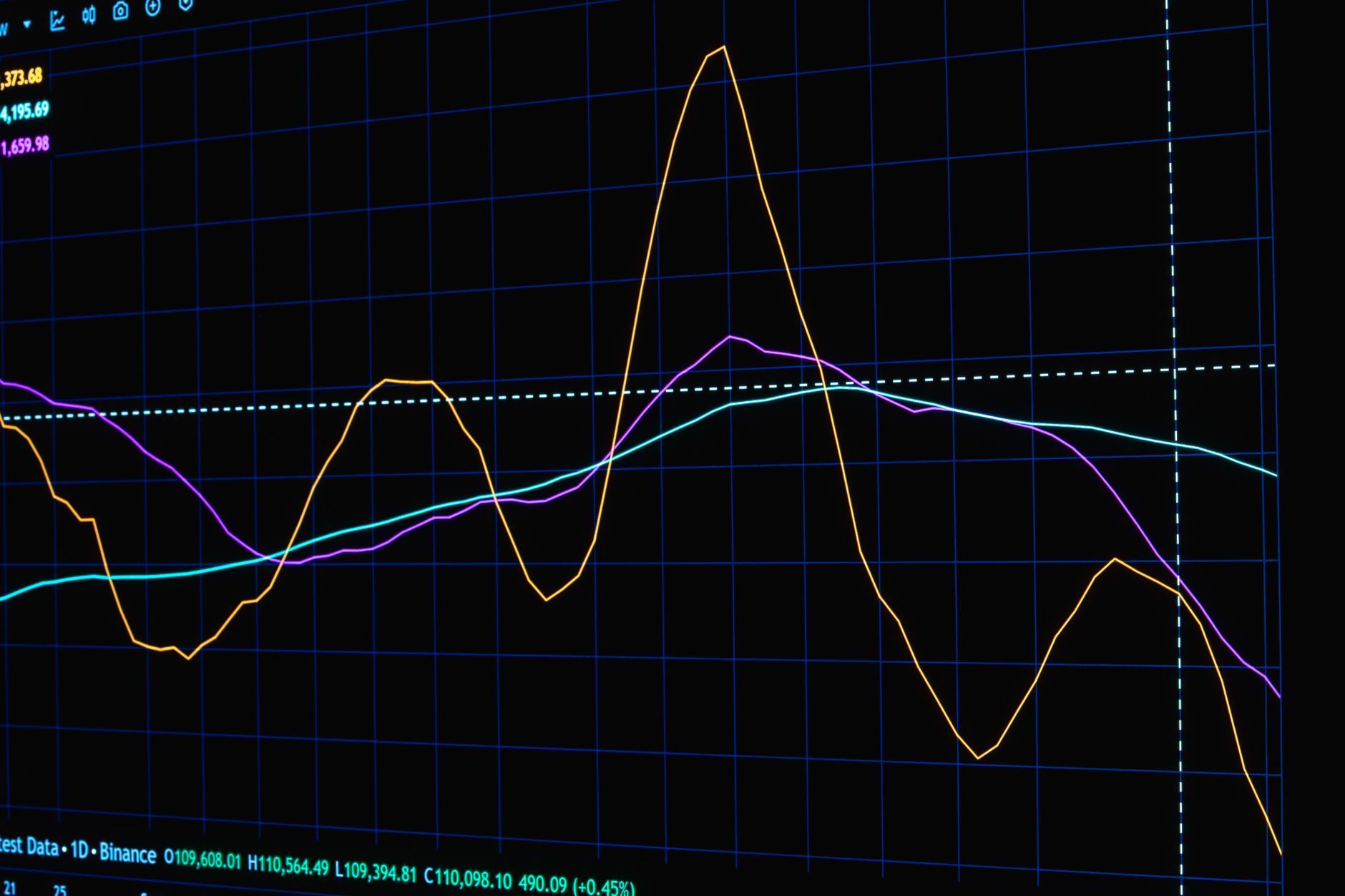
Separate borrower interest, trading fees, and incentive rewards before comparing a displayed APY.
Image source: Photo by Markus Winkler via Pexels · License
Start with the yield source, not the APY
A defensible comparison begins by identifying who pays the return and why. There are three broad buckets:
- Borrower-paid interest: Lenders receive interest paid by borrowers. The rate usually responds to pool utilization and can change rapidly.
- Trader-paid swap fees: Liquidity providers receive a share of fees paid when trades route through their liquidity. Returns depend on volume, fee tier, liquidity share, and price movement.
- Incentives: A protocol, foundation, or third party distributes tokens or points to attract liquidity. These rewards can be valuable, but their value, duration, unlock terms, and sell liquidity are uncertain.
A position can combine all three. The key question is how much of the displayed return remains if incentives fall to zero. For lending markets, inspect the protocol's interest-rate model and reserve mechanics. For example, the Aave documentation on the Pool contract explains the supply, borrowing, collateral, and liquidation functions that underpin a money-market position.
Caption: Separate borrower interest, trading fees, and incentive rewards before comparing a displayed APY.
Pool composition and withdrawal depth matter as much as the fee rate when assessing stablecoin liquidity strategies.
Image source: Photo by Rafael Minguet Delgado via Pexels · License
A net APY framework that survives a rate change
Use a simple estimate before you commit funds:
`Estimated net annual return = organic yield + realizable incentives - recurring costs - one-time costs - expected loss allowance`
Then divide by the capital allocated. This is an estimate, not a forecast. Each input needs an explicit assumption.
| Input | What to verify | Common mistake |
|---|---|---|
| Organic yield | Borrow APR, utilization, swap fees, volume, your share of liquidity | Treating a single day's rate as permanent |
| Incentives | Token amount, emission end date, vesting, liquidity, reward claim rules | Pricing rewards at spot without an exit assumption |
| Recurring costs | Gas, vault performance fees, management time, rebalancing | Ignoring frequent transactions on expensive networks |
| One-time costs | Deposit, approval, bridge, withdrawal, swap, and slippage costs | Annualizing a yield on a small position that cannot absorb fees |
| Loss allowance | Depeg, impermanent loss, liquidation, contract and oracle exposure | Assuming audited code eliminates loss risk |
A deliberately conservative example
Assume a pool interface shows a 9% annualized rate, composed of 3% lending interest and 6% token rewards. Your working case might value only part of the token rewards until you have checked the distribution schedule, market depth, and claimed-token costs. If bridge, swaps, and expected management costs equal 1% of the position over your intended holding period, the 9% display is not your net return.
This approach does not assign a universal discount to incentives. It forces the analyst to record a reasoned, revisable assumption. If the reward program ends next week or the token has thin liquidity, a low realization assumption may be more appropriate than carrying the full advertised value into a plan.

A leveraged loop adds borrow-rate, collateral-price, oracle, and liquidation variables to a yield calculation.
Image source: Photo by crazy motions via Pexels · License
Five strategy types, compared by mechanism and downside
1. Overcollateralized lending
Mechanism: Deposit an asset into a lending market. Borrowers pay interest, and suppliers receive a share after protocol reserves. Some markets add token rewards.
Where net yield can come from: Borrower-paid interest is the core source. Incentives are additional and should be modeled separately.
Best fit: Users who want a relatively simple onchain yield mechanism and can accept variable rates and protocol exposure.
Primary risks: Smart-contract failure, oracle failure, governance changes, stablecoin depeg, withdrawal congestion when utilization is high, and bridged-asset risk where applicable. Supplying assets does not normally create a liquidation risk by itself, but supplying collateral while borrowing does.
What to check: Current and historical utilization, supply and borrow rates, available liquidity for withdrawal, collateral parameters, reserve factor, reward end date, and whether the asset is native or bridged.
2. Stablecoin liquidity provision
Mechanism: Provide two or more assets to an automated market maker. Traders pay swap fees, and the pool may distribute incentives.
Where net yield can come from: Trading fees are the organic component. Incentives may dominate displayed APY during a campaign.
Best fit: Users who understand the specific stablecoins, pool composition, and exit route.
Primary risks: A stablecoin can lose its peg, pools can become imbalanced, contracts can fail, and a bridge or issuer can introduce a separate point of failure. A pool may have a narrow spread yet still leave liquidity providers holding the asset the market is selling.
For concentrated-liquidity designs, understand the range mechanics before committing funds. The Uniswap concentrated liquidity documentation explains that liquidity can be active only within chosen price ranges. Once price moves outside the range, the position stops earning swap fees until it becomes active again or is repositioned.
Caption: Pool composition and withdrawal depth matter as much as the fee rate when assessing stablecoin liquidity strategies.
3. Concentrated liquidity on volatile pairs
Mechanism: Allocate liquidity inside a chosen price range for a selected trading pair.
Where net yield can come from: Swap fees, sometimes supplemented by token incentives.
Best fit: Users able to monitor ranges, inventory drift, gas costs, and the trading behavior of the pair.
Primary risks: Impermanent loss relative to holding the assets, out-of-range idle capital, adverse selection during volatility, smart-contract risk, and frequent rebalancing costs. A high fee APR can coincide with sharp price moves that hurt relative performance.
What to check: Pair volatility, fee tier, range width, historical volume quality, competitor liquidity, your rebalance rules, and the cost to execute those rules. Define the benchmark in advance: holding one asset, holding a 50:50 basket, or another allocation.
4. Liquid staking and restaking-linked positions
Mechanism: Stake an asset through a liquid staking protocol or hold a liquid staking token, then potentially deploy that receipt token elsewhere.
Where net yield can come from: Base staking rewards are the initial source. Additional lending, liquidity, or restaking-related incentives add distinct layers of exposure.
Best fit: Users who can map each layer and avoid confusing a stacked headline rate with a single low-risk return.
Primary risks: Validator performance, withdrawal queue timing, smart-contract and governance risk, token discount risk, slashing where relevant, and additional liquidation or depeg risk if the receipt token is used as collateral. Ethereum's staking overview is a useful starting point for distinguishing network staking from applications built around staked assets.
What to check: Redemption route, withdrawal mechanics, validator and protocol disclosures, token liquidity, collateral treatment in downstream markets, and whether each incremental return is fees, staking rewards, points, or emissions.
5. Leveraged lending loops
Mechanism: Supply collateral, borrow against it, swap or redeposit the borrowed asset, and repeat to increase exposure to a yield spread.
Where net yield can come from: The position attempts to amplify the gap between supply-side returns and borrowing costs, plus any incentives.
Best fit: Experienced users who can calculate health factor, liquidation thresholds, borrow-rate sensitivity, and unwind liquidity.
Primary risks: Liquidation, borrow-rate spikes, oracle movements, collateral depegs, smart-contract risk, and inability to unwind during market stress. A modest adverse price move can matter more than several months of yield.
Caption: A leveraged loop adds borrow-rate, collateral-price, oracle, and liquidation variables to a yield calculation.
Gross APY versus net APY: a practical comparison table
| Strategy | Organic yield source | Incentive dependence | Management burden | Key exit constraint |
|---|---|---|---|---|
| Lending supply | Borrower interest | Low to high | Low | Available pool liquidity |
| Stablecoin LP | Swap fees | Low to high | Low to medium | Pool imbalance and asset-specific liquidity |
| Concentrated LP | Swap fees | Low to high | Medium to high | Range position and inventory conversion |
| Liquid staking stack | Staking rewards plus downstream activity | Medium to high | Medium | Redemption timing and receipt-token liquidity |
| Leveraged loop | Yield spread | Often high | High | Health factor and unwind liquidity |
The table compares mechanisms, not safety levels. A lending pool with weak collateral controls can be riskier than a well-understood liquidity position, while a seemingly simple stablecoin pool can have material issuer or depeg exposure.
How to research a live opportunity without chasing the screen
- Capture the snapshot. Record the chain, protocol, contract address, assets, displayed yield components, block time or date, and program end date.
- Read primary documentation. Confirm deposit and withdrawal rules, fee schedule, contract upgrade controls, oracle design, collateral parameters, and emergency powers.
- Check liquidity in both directions. Can you enter and exit at your intended size without large slippage? For lending, can suppliers withdraw if utilization rises?
- Model an incentive-free case. Calculate the return from interest or fees alone. This is a useful durability test, not a prediction.
- Model a stress case. Use lower fees or utilization, lower reward value, higher gas, and a delayed exit. For loops, include an adverse collateral-price move and higher borrow cost.
- Verify contracts and dependency layers. Identify bridges, price oracles, vault managers, multisigs, admin roles, and external assets. More layers mean more assumptions.
- Set an exit rule before entry. Define the conditions that would make you reduce or close the position, such as a reward-program end, range breach, utilization threshold, or falling health factor.
Yield dashboards can help find candidates, but they are screening tools rather than proof of sustainability. Use a dashboard such as DefiLlama Yields to locate current opportunities, then verify displayed inputs against the relevant protocol's contracts, interface, and documentation.
Risks that a net APY figure cannot fully price
A spreadsheet can subtract known fees. It cannot precisely price a governance attack, an oracle malfunction, a contract exploit, a bridge failure, or a sudden loss of market liquidity. Treat these as position-sizing and diversification questions rather than rounding errors.
- Smart-contract and upgrade risk: Bugs, privileged upgrade paths, and compromised admin keys can affect deposits or withdrawals.
- Oracle risk: Incorrect or delayed prices can trigger bad debt or liquidations in lending markets.
- Counterparty and issuer risk: Centralized stablecoin issuers, custodians, and offchain reserve structures can affect redemption and transferability.
- Governance risk: Token holders, multisigs, or delegates may alter parameters, incentives, collateral listings, and fees.
- Bridge risk: Bridged assets depend on the bridge's security model and redemption path.
- Liquidity risk: A position may be transferable in theory but expensive or slow to exit in stress conditions.
A decision rule for sustainable-looking yield
A yield opportunity deserves deeper review when you can explain, in plain language, all of the following:
- Who is paying the yield?
- Which part is recurring protocol revenue or borrower interest?
- Which part is incentive-driven, and when can it end?
- What would the return look like after expected costs?
- What asset will you hold if the market moves against the pool or range?
- Can you exit at the intended size, and under what conditions might that fail?
- Which contracts, oracles, bridges, governance actors, and issuers must work as expected?
If any answer is unclear, the displayed APY is incomplete information. The appropriate response is more research, a smaller experimental allocation if suitable for your risk process, or no deployment.
FAQ
Which crypto network currently offers the highest APY for staking?
There is no durable, universally highest-APY network. Staking yields vary with each network's issuance rules, validator economics, token price, lockup terms, and slashing conditions. Compare the source of rewards, withdrawal timing, validator or protocol fees, and token risk instead of selecting a network from a headline rate.
What is yield farming crypto?
Yield farming is the practice of deploying crypto assets into DeFi protocols to earn interest, trading fees, token incentives, points, or a combination of them. Common examples include supplying a lending market, providing automated-market-maker liquidity, or staking a receipt token. The return and risks depend on the underlying mechanism.
Is DeFi crypto a good investment?
DeFi is a set of financial applications and protocols, not a single investment. A position may involve volatile tokens, smart contracts, stablecoins, liquidity pools, borrowing, or governance rights, each with different risks. Assess the specific asset, protocol controls, liquidity, fee and reward source, and downside scenario before making a decision.
Which liquidity pool is the best?
The best liquidity pool depends on the assets you are willing to hold, the fee source, incentive duration, pool liquidity, contract design, and your ability to manage the position. A pool with the highest displayed APY may rely heavily on temporary rewards or expose providers to meaningful inventory and depeg risk. Compare estimated net returns under normal and stressed conditions.
Frequently Asked Questions
Which crypto network currently offers the highest APY for staking?
There is no durable, universally highest-APY network. Staking yields vary with each network's issuance rules, validator economics, token price, lockup terms, and slashing conditions. Compare the source of rewards, withdrawal timing, validator or protocol fees, and token risk instead of selecting a network from a headline rate.
What is yield farming crypto?
Yield farming is the practice of deploying crypto assets into DeFi protocols to earn interest, trading fees, token incentives, points, or a combination of them. Common examples include supplying a lending market, providing automated-market-maker liquidity, or staking a receipt token. The return and risks depend on the underlying mechanism.
Is DeFi crypto a good investment?
DeFi is a set of financial applications and protocols, not a single investment. A position may involve volatile tokens, smart contracts, stablecoins, liquidity pools, borrowing, or governance rights, each with different risks. Assess the specific asset, protocol controls, liquidity, fee and reward source, and downside scenario before making a decision.
Which liquidity pool is the best?
The best liquidity pool depends on the assets you are willing to hold, the fee source, incentive duration, pool liquidity, contract design, and your ability to manage the position. A pool with the highest displayed APY may rely heavily on temporary rewards or expose providers to meaningful inventory and depeg risk. Compare estimated net returns under normal and stressed conditions.